Salamander Point
Salamander Point extends off the outer ledges of Newcastle, N.H. overlooking a 300' wide entrance to Hart's Cove, opposite the Point is fort William and Mary named by the English in 1693, the landmark was later renamed as Fort Constitution. Today cannon ports remain and can be seen on the once fortified walls.
Hart's Cove is one of the first harbor and anchorage site seen in New Hampshire when entering the mouth of the Piscataqua River, The Atlantic Ocean heading into Portsmouth Harbor offers transient ships an opportunity to trade their contemporary goods of European or West Indies cargo for furs, replenish food supplies or access closer to shore for ship repairs.
Undertaking this visual study along the river’s obscure edge was physically challenging. Well worth it, however, simply for the education it led us to. The outer head lands were suspected to contain the remains of antiquity and other, as equally interesting relics. Centuries of ships entering or leaving the cove, most certainly guaran teed the discovery of ancient debris.
Early on, our primary objectives were focused on culinary delicacies such as scal lops. Soon, however, after the initial finds of discarded 18th century wine or rum bot tles, shards of Kaolin pipes and come what may in the way of unknown treasures and remnants of middle-age architecture, it became apparent which activity would lead to a fifty year obsession.
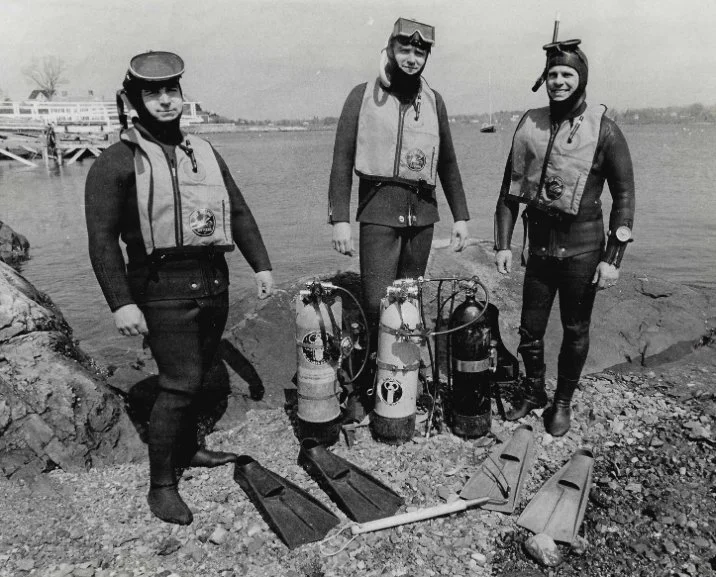
We were privileged to witness unusual anomalies within this vast underwater wonderland. This was a great educational adventure for father and son, shared regu larly with our many friends and diving buddies.
However, as relative new comers, and perhaps still a bit naive, we enthusiasti cally and literally plunged into the state of New Hamp shire’s last frontier. The Pis cataqua River and its tribu taries are forever in motion, pushed or pulled by the strong currents off the shores of New Castle. The surrounding outer ledges fit the ideal set ting for an archeologically in teresting expedition. It was puzzling at first, learning how to accommodate the current’s constant shifting. But, as we discovered over an over again, the process naturally resulted in an always new, never be fore seen landscape, littered with an assortment of antiqui ties, relics and maritime treasures. So we figured out how to deal with the currents, because this was an obviously dynamic and potentially re warding site and we wanted to explore it.
We prepared and deployed as professionals. We implemented diving procedures and protocols, which especially came in handy during dives at the Salamander Point site. Our main concern was the limited visibility which was often complicated by the incoming or outgoing tides. Protocols called for keeping no further than arms length between diving partners.
The ledges off Salamander Point, along the entrance to Hart’s Cove, required ini tial charting of the bottom’s topography along the river’s edge. In a detailed overview from depth ranging from 18’ to 45’, its profile similar to a soup bowl. The top rim ta pers a short distance over a sandy bottom, near a secondary deeper layer of silt and mud. All this followed by an abrupt and precipitous drop to 45 feet, sloping off toward the treacherous currents of the Piscataqua River
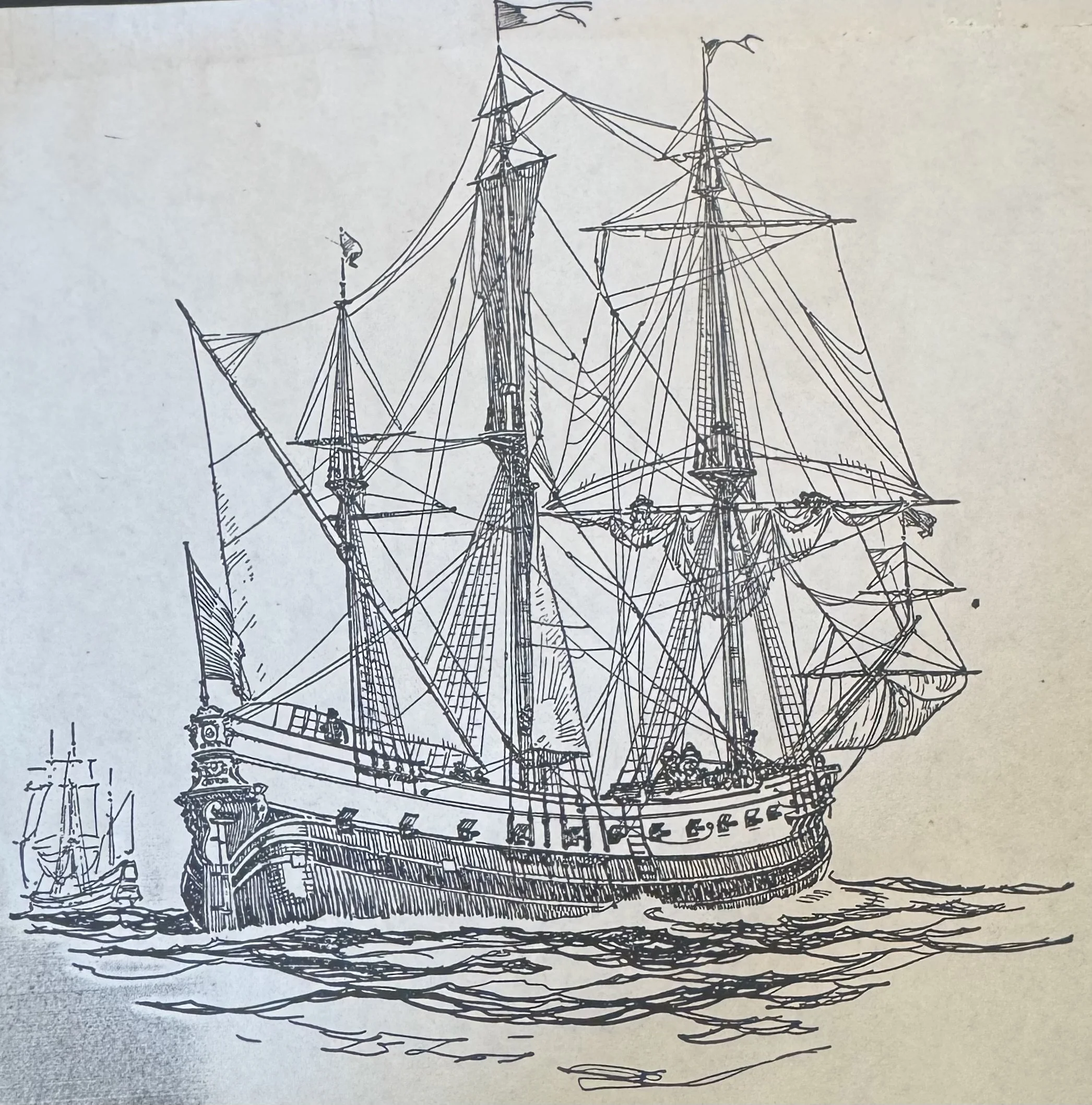
After years of research, several significant clues finally revealed the identity of an 18* century schooner and Privateer. This ship belonged to a Doctor George Jackson of Kittery, Maine. It was anchored off Salamander Point, New Castle, New Hampshire.
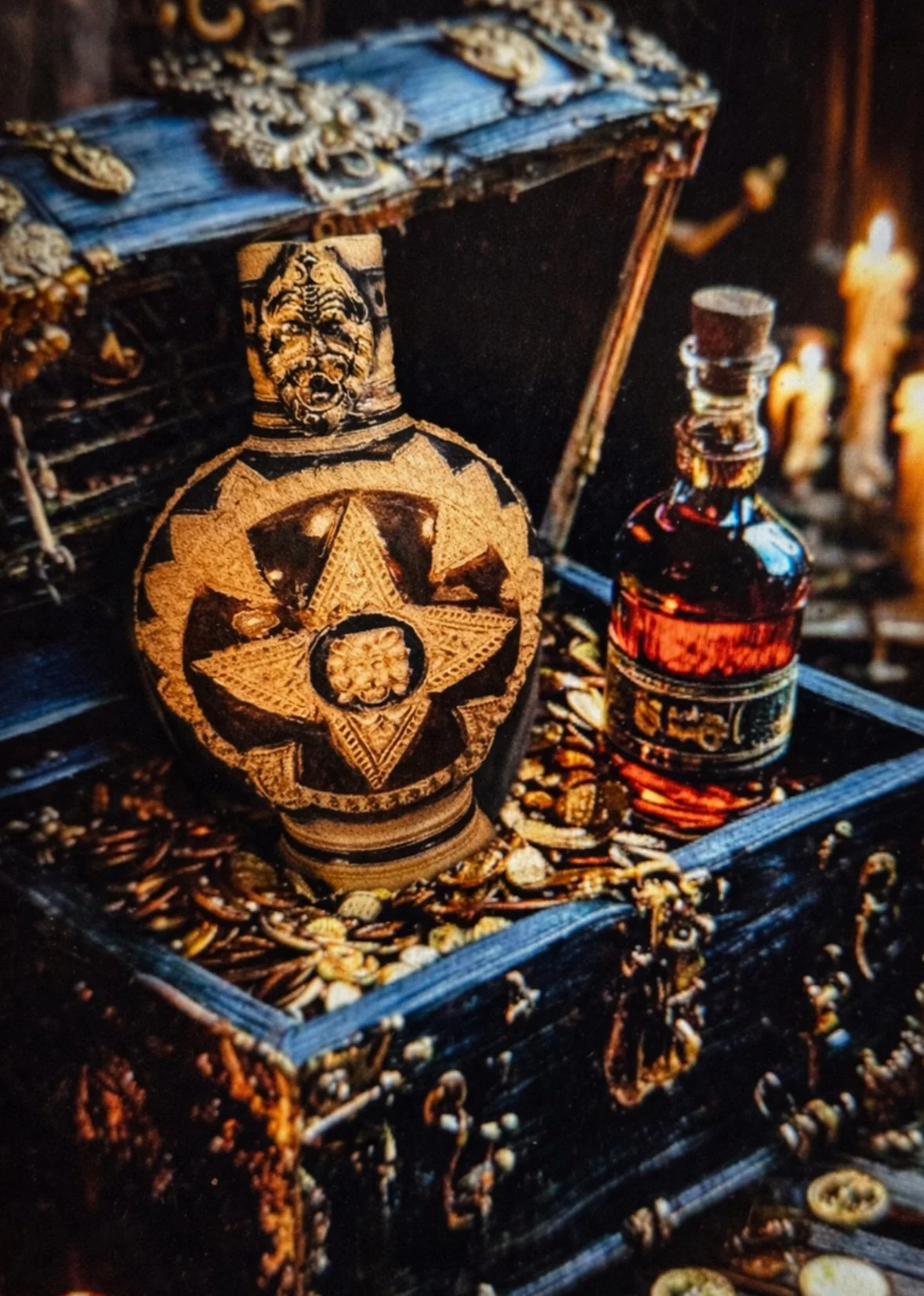
In 1969 while diving with friends and exploring the shore line along the Piscataqua River among isolated ledges, a single onion bottle was recovered,
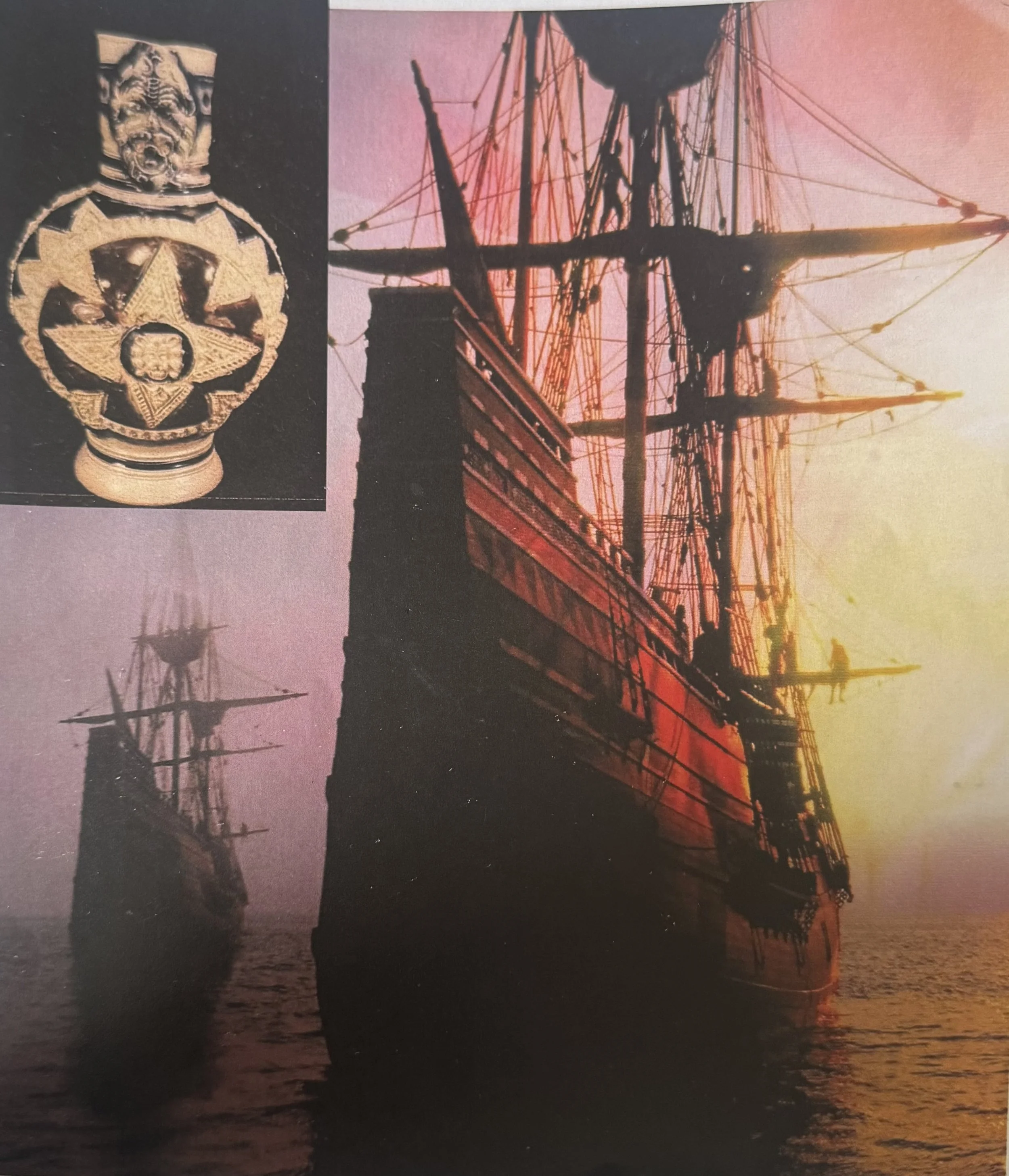
"W. Darracott 1723". A genealogical study of the glass seal identified a coastal mariner to be married on October 5, 1723. Further studies mentioned the bride and groom. Obviously the couple anticipated other mariners to arrive in South Carolina. Wine bottles with the name W. Darracott was to be handed out to the guests upon arrival to commemorate the marriage. After the wedding they were headed to the Barbary Coast on a diplomatic mission.
Over the years duplicate bottles seals were returned to Salamander Point and have been found under water and recovered by local divers. Also found was gravel ware and North Devonshire Sgrafitto, a yellow slip ware with bird and plant designs that had been shipped from England.
After a long voyage, on July 24, 1724, Doctor George Jackson, a Privateer returned to New Hampshire.
The same day as his arrival the Lieutenant Governor ordered the drums beaten for volunteers. The Native American Indians had taken 11 fishing vessels and 22 men had been killed.
Doctor Jackson and Sylvester Lakeman caught up with the 18th century Indian fighters who had been harassing the fisherman, Man of War style. It was a clear dismal retreat for Doctor Jackson. Besides his ship's main mast and Jackson being wounded by 3 musket balls contributed to the ship and cannons being abandoned off Salamander Point.
Further studies on the Salamander Point shipwreck revealed a well armed vessel of varies caliber cannon shot, proving the ship was a Privateer sanctioned by the governor to fight offshore, further inquiries narrowed the ship to a locally built Schooner privately owned warship, identifying Dr. George Jackson of Kittery Maine as the Captain and Indian fighter, son in law to one of the first settlers Col.
William Pepperell along the Piscataqua, his ship had been severely damaged in 1724 during a battle along the New England coast with Native American Indians as sea fighters that had been trained by the English. The battle ended in Pe-nobscot, the Captain himself had been severally wounded by three musket shots and one mate as told, bought the farm. With the assistance of Captain Sylvester Lakeman another Privateer in his Shallop that had shared a mooring near Captain Jackson, assisted the disabled ship taking three weeks to return back to New Hampshire. Both Captains lived in Kittery Maine.
The following research was interesting, besides the abandoned cannons, bottle seals stamped with the name W.Darracott 1723 were among other related sherds, mostly items relative to a shipment of Devonshire, all providing clues revealing their origin.
The bottle seal came first, it was a wedding date, on Oct 5, 1723, and the married couple were headed to the Barbary Coast on a diplomatic mission.
The wine bottles were handed out to guest to commemorate the wedding and voyage, a shipment of yellow Sgrafitto ware painted with birds and flowers. Apparently the grafitto was considered a new shipment taken back to New Hampshire.
The date of George Jackson proved his presence at the wedding and return back to New Hampshire dated July twenty fourth the date of battle
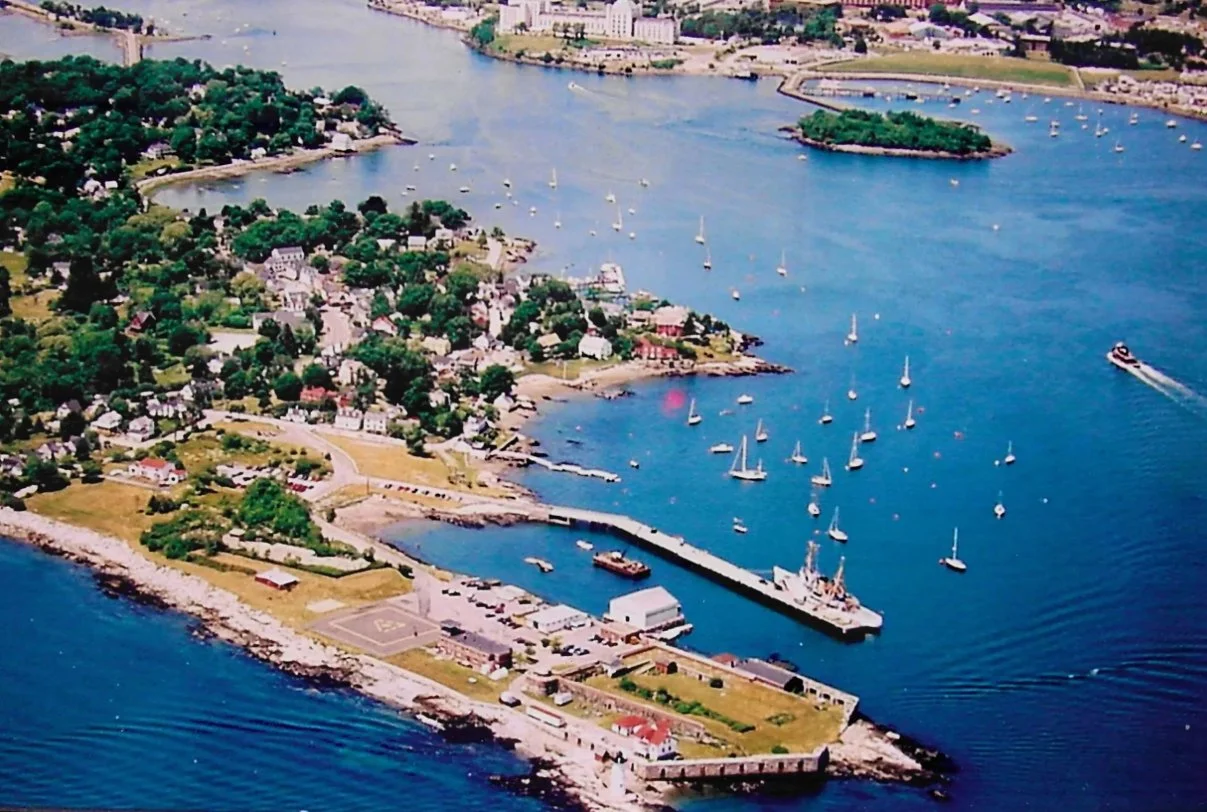
As free thinking adventurers and experienced river divers, undertaking a legendary research and study in an obscure river edge was no surprise although challenging, headlands along shipping lanes are usually poised to contain not only ship wrecks but interesting relics from other na-tions. The main objectives for divers was first search for culinary treasures of scallops, then attempt recovering discarded early wine bottles, identifying 17th to 18th century kaolin pipe makers along the seabed ,unusual pottery or anomalies, a great sport and hobby for father and son along withgreat friends, a life time of enjoyment in the Piscataqua River, one of the tenth strongest and challenging rivers in North America.
Unlike the archaeological value of a time capsule, past disturbance from local dredging mixed among harbor litter soon becomes common place and appear to remain unnoticed, as sporting enthusiast, we plunged into the unknown surroundings, in a secluded frontier constantly moving by the strong currents off Newcastle, N.H. along the outside ledges heading into Hart's Cove.
The cove fit the ideal description for an interesting survey to explore, amazingly the shifting sandy bottom was constantly revealing isolated objects of interest, particularly sherds of imaginable character, 17th to 18th century wine bottles along hundreds of kaolin smoking pipes commonly found in large quantity in any coastal site. .
Within a two year study, two abandoned wrecks sites had been discovered, not to confuse the reader, the authors will need to begin by identifying basic misconceptions that could arise about the remains of both wrecks. To begin, the two abandoned wreck sites each contain some wood structure, however only one wreck held two cannons, it was unfortunate both cannons in grave error were removed or from other divers one site the Salamander Point Wreck 1723, . both are not associated and at a great distance apart. The First wreck discovered was at high tide in 20' of water depth, close to shore alongside Salamander Point with duplicate wine onion bottle seals initialed 1723 W. Darracott. The Second wreck site was located later in the mid depths of Harts Cove and presently under study with seal by state officials. The site however is only identified as the Hart's Cove wreck and belongs to the second provincial period of 1692 to 1775.
1724 shipwreck Salamander point
New castle, New hampshire