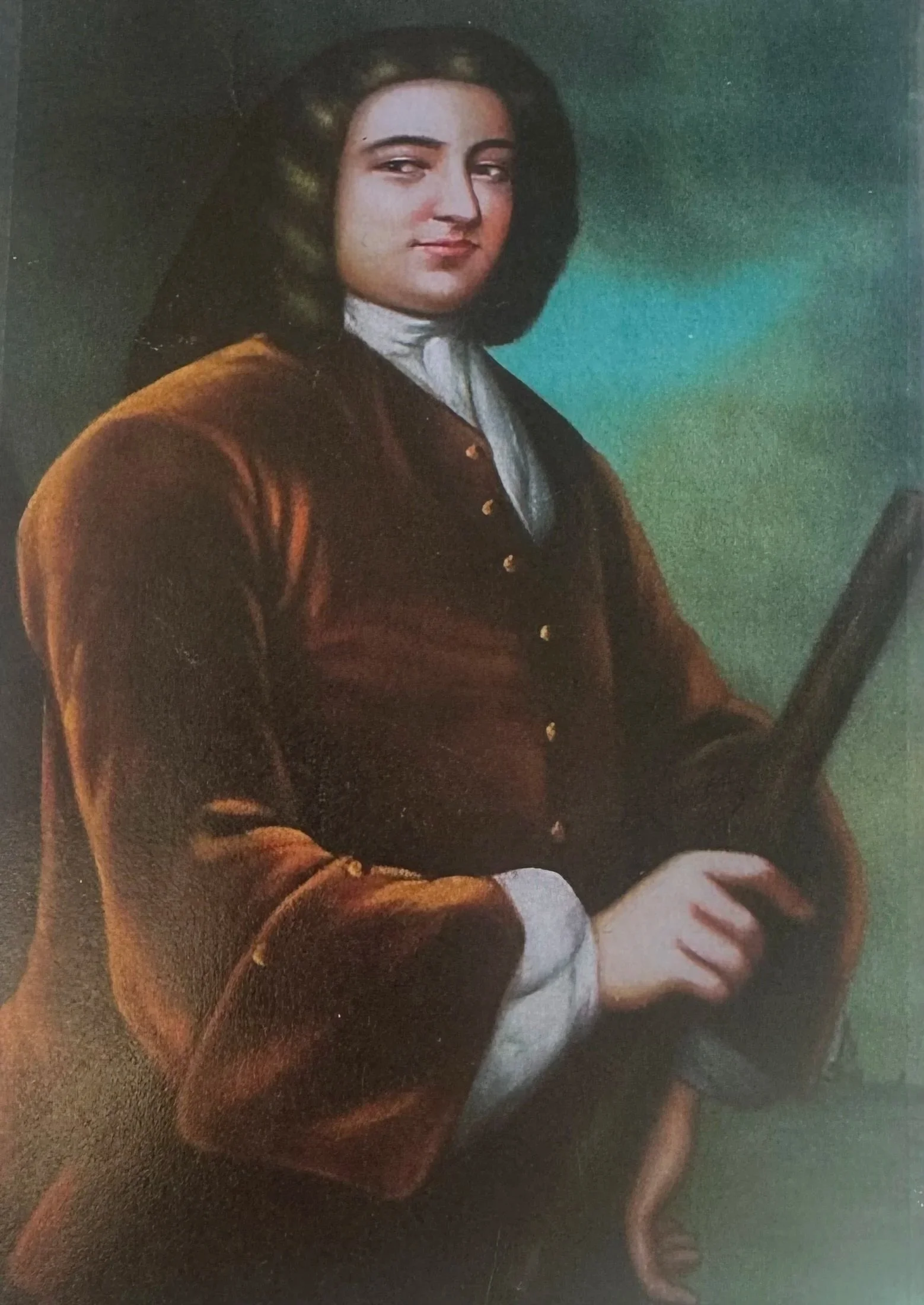
aDMIRAL VERNON
On October 19th in 1739, war broke out between England and Spain. The English, eager to show their naval strength, chose Vice Admiral Vernon to take command of a squadron of six ships carrying two hundred West Indian soldiers and nearly twenty-five hundred seaman.
Vernon had previously boasted in the house of Parliament that he could easily capture Porto Bello, which was one of the two nearest Spanish ports of trade. The other, Cartagena, would require more land troops and result in a greater loss of men.
Vernon knew that Spain had heard of the English planning to attack Porto Bello and that the Spaniards were sending a fleet to the area to defend its forts.
Vice Admiral Vernon believed that an early capture of Porto Bello, before the arrival of the Spanish would be advantageous. It would not only destroy the harbor's fortification, but block future use of the port. He also felt confident that even after a late arrival, that of the English fleet could sail into the port, attack and sink the Spanish ships while at anchor.
With the battle plan in order, Admiral sent word to his captains to set sail and rendezvous in Jamaica. On the 15th day of November, 1739, Vice Admiral Vernon set sail from Port Royal to mount the attack on Porto Bello.
The Town of Porto Bello
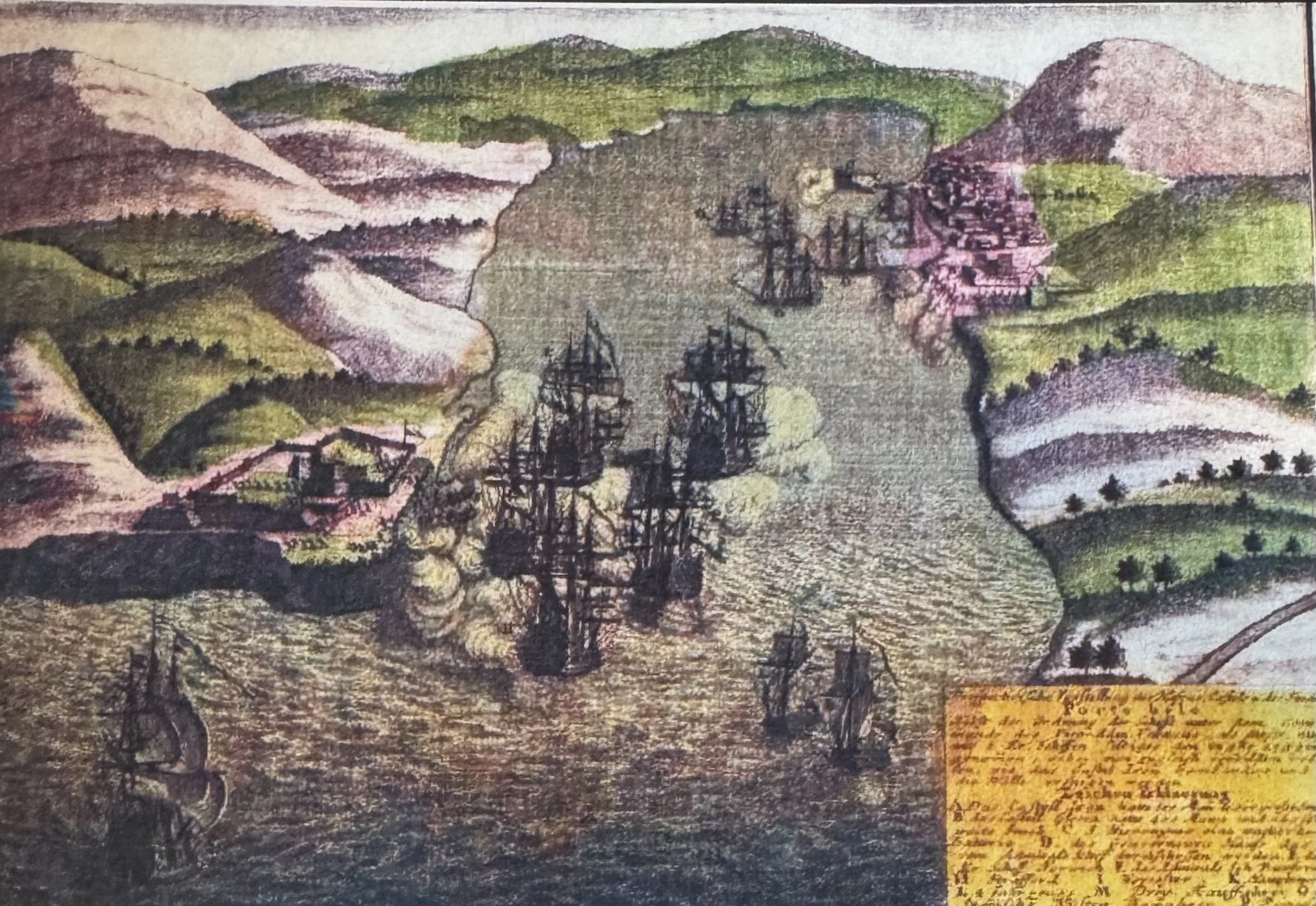
The town of Porto Bello stands on the North side of the Isthmus of Darien, about fifty miles from Panama. The small bay runs east and west with an entrance of less than one mile in length. The land rises very steeply behind the harbor, in both east and west directions. Less than a few miles away, two other ports are connected with Panama across the Isthmus. This was the route where treasure and merchan. dise were carried from Panama.
On the north shore stood Iron Castle, the fort built on top of a steep rock mounted with seventy eight guns above with a battery of twenty two guns below.
The Battle and Victory at Porto Bello
As the ship drifted southward, the Norwich and Worcester dropped anchor closer inshore and immediately opened fire on Iron Castle. Moments later the flagship Burford came around the point and anchored even closer to Iron Castle. A volley of shots greeted the Admiral's ship, inflicting damage to an upper deck and shearing the fore topmast, nearly striking the main mast and the Vice Admiral himself. Three men were killed instantly and five wounded. The three British ships quickly returned and fire overwhelmed the Castle's defenses.
Captain Vernon then gave the signal to his soldiers to shore the long boats and within a relatively short time, three hundred Spaniards were either killed or had escaped. As the Union flag was being raised, the Strafford and Princess Louisa sailed abreast of the Iron Castle and dropped anchor.
The change of wind had delayed the continuance of the attack. Vernon's battle plan would have to resume the following day. Some artillery fire was now being directed to the squadron from Gloria Castle, most falling short of the flagship. The Burford fired back with shots falling short of the fort sinking an anchored Spanish Sloop. The exchange lasted until 8:00 pm. Finally, Vernon ordered his ships out of range of the castles fire for the night.
Vernon, Edward 1684-1757, British sailor, was born at Westminster. He entered the navy in 1700 and Parliament in 1722; as vice-admiral he was in command at the capture of Porto-Bello 1739 and in the disastrous Cartagena expedition of 1741. Known as 'Old Grog' because he usually wore a grogram boat cloak. He was the first officer to order three parts of water to be added to the rum ration. On return from the West Indies he was promoted to admiral.Three hundred men garrisoned the fort. At the head of the bay on the southeastern corner are Gloria and San Jeronimo Castle. Both these forts were also heavily fortified and offered protection to the town. Castle Gloria mounted a total of one hundred twenty eight guns and was manned with four hundred troops. The Spanish considered the deep and wide bay impregnable. The town itself was situated in low swampy ground and consisted of about five hundred houses, two churches, a treasury and customs house. The lack of sanitation made for an unhealthy environment for town peo-ple, nevertheless the small community was a thriving market for the West Indies.
Captain Vernon's squadron arrived just outside Porto Bello on November, 20th and anchored for the night. The following morning at 5:00 a.m. the line of battle was set. The Hampton Court, under the command of commodore Brown would lead. The plan was to enter the harbor by Iron Castle firing broadside at the castle and continue the attack on Gloria Castle. The Worcester would proceed in the same manner and assist the lead ship. The Norwich would also continue the discharge of artillery onto the Iron Castle and as it set off in the direction of San Jeronimo Castle. The Strafford, Princess, Louisa and the flagship Burford, would be last to engage the Iron Castle.
Vernon's squadron set sail as the main assault toward Porto Bello had begun.
The winds were from the northwest. The Hampton Court proceeded as planned. As lead ship she sailed between the rocks and Drake Island and was prepared to be the first to engage the Iron Castle. As the Hampton Court entered the harbor's entrance, the wind changed easterly, making Commodore Brown's attack on Gloria Castle dangerous for his ship. The battle plan was changed. The Captain dropped anchor and quickly engaged with Iron Castle firing some four hundred shots in one half hour The ship's artillery softened the Spaniard'» defenses. The Hampton Court's anchor cable eventually was severed by enemy fire
General Balliere, when appointed by the King in 1732, in an attempt to standardize French gun calibers, classified 4, 8, 12, 16 and 24 pounders for field and for-tress. It would be safe to assume that the same bronze cannons were also used for naval artillery.
THe attack fleet
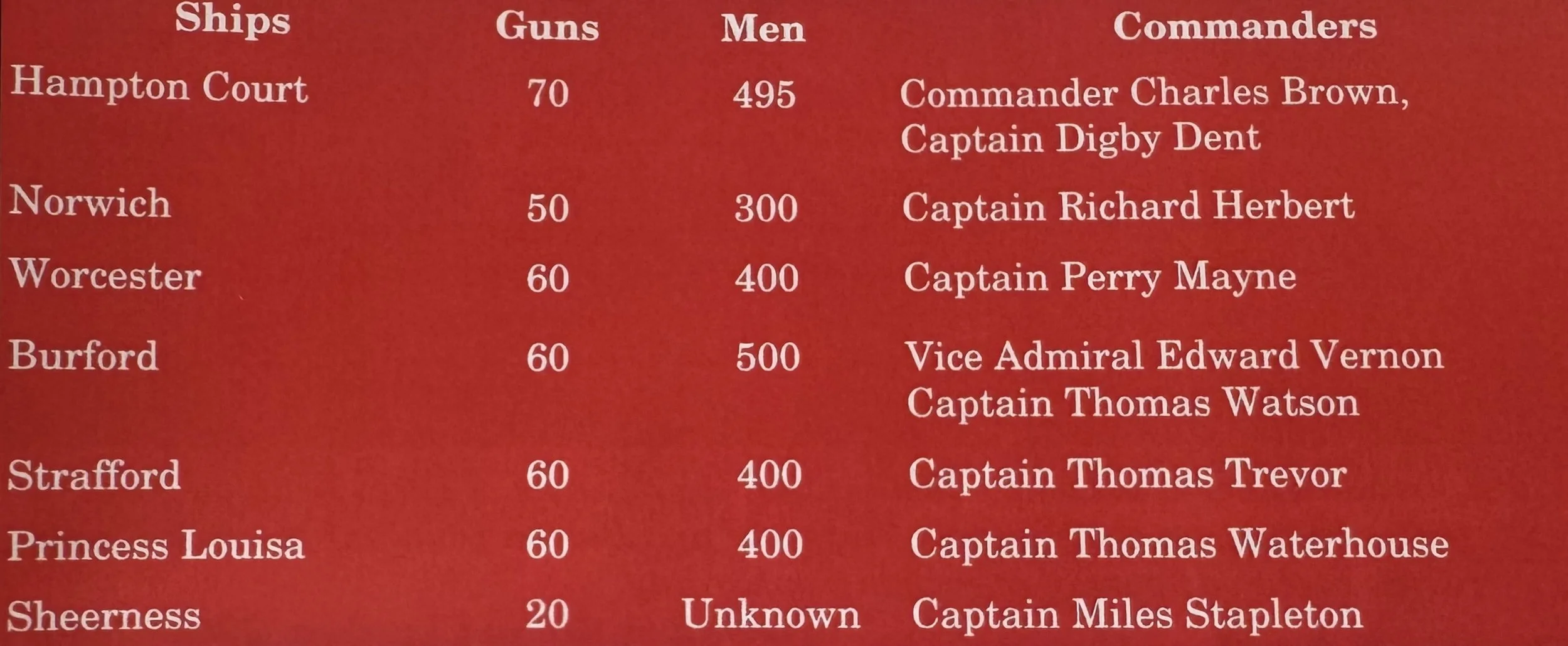
The next morning, November 22,1739, Vernon sent word to the Governor of the town to surrender without conditions. The English squadron was prepared to destroy the remaining castles and capture the six Spanish ships, two of which were 20 gun men- of -war. They were the Triunfo and the Astraea. The anchored ships were of little support for the defenses of Porto Bello. Most of the crew had been on shore waiting for treasure from Lima to arrive by way of Panama.
At 3:00 p.m. a flag of truce was hoisted. The Governor of Porto Bello had surrendered the town. Admiral Vernon ordered Captain Newton, along with about one hundred twenty of his troops, to land and take possession of Gloria Castle and San Jeronimo Fort, along with the two now surrendered Spanish men-of-war.
One of the several captured vessels carried 40 brass cannons, 4 brass mortars, eighteen smaller brass guns and a quantity of ammunition, in addition to cash worth perhaps as much as $10,000, which would have been a substantial amount in those days.
The inhabitants of the town were allowed to keep their possessions, however, the troops were given orders to blow up the walls of the three protecting forts. Spiking the vent holes disabled the 80 iron guns. The more valuable brass pieces and ammunition stores were brought on board the English ships.
Written English accounts state that they defeated about 300 defenders at Porto Bello. Admiral Edward Vernon had accomplished his mission and the harbor would now be opened and defenseless. The English eventually left and returned to their home base in Jamaica. England received the news of Vernon's victory in Porto Bello and triumphantly celebrated his success.
Courtesy: "Admiral Vernon and the Navy by Douglas Ford”.